Visconti-Sforza Tarot: The Judgment Card
The Deck:
I encountered the Visconti-Sforza tarot deck in a small tarot shop in Milan called Il Meneghello. The shop was long and narrow. The front part displayed various tarot decks. The back was the shop owner’s tarot-drawing workstation. He remains one of the last few tarot artists in the world, and one of the most well-known ones, who still paints tarot cards by hand.
Not far from the shop is Sforzesco Castle, where the Visconti-Sforza tarot was invented as playing cards in the 15th century. Only three original decks have survived until today and one of them is housed at the Morgan Library in New York.
At the shop, I first noticed a different deck, something a bit more whimsical and less daunting, so to speak, than the Visconti-Sforza deck. But the shop owner kept pointing me to it. His daughter came to translate for him. I forgot our conversation, but I did remember hesitating about buying the Visconti-Sforza deck, even though the tarot artist seemed to think it was a good deck for me.
The Visconti-Sforza tarot was one of the earliest complete tarot decks, if not the earliest, and inspired later decks that were created for divination. That and the fact that the tarot shop was right next to where the deck was invented (Sforzesco Castle is widely considered the birthplace of tarot) made the encounter feel very romantic in hindsight. At the time, I had no problem deciding on the purchase of the whimsical deck that delighted me. But I wasn’t ready for the Visconti-Sforza deck right away. I left the shop, took a short walk, found a place to sit and did a bit of meditation. I pulled a card from the deck that I had just bought. All of this propelled me to go back and get the limited-edition Visconti-Sforza deck handmade by the tarot shop owner. After I bought the deck, I took it on a stroll through Sforzesco Castle.
The Card:
A while ago (and a few years after I bought the deck), the idea of going through the Visconti-Sforza deck, starting with the Major Arcanas, came to me. I want to write about each card in the order that I pick from the deck. (Let’s see how long this endeavor lasts.) The first card I picked was The Judgment.
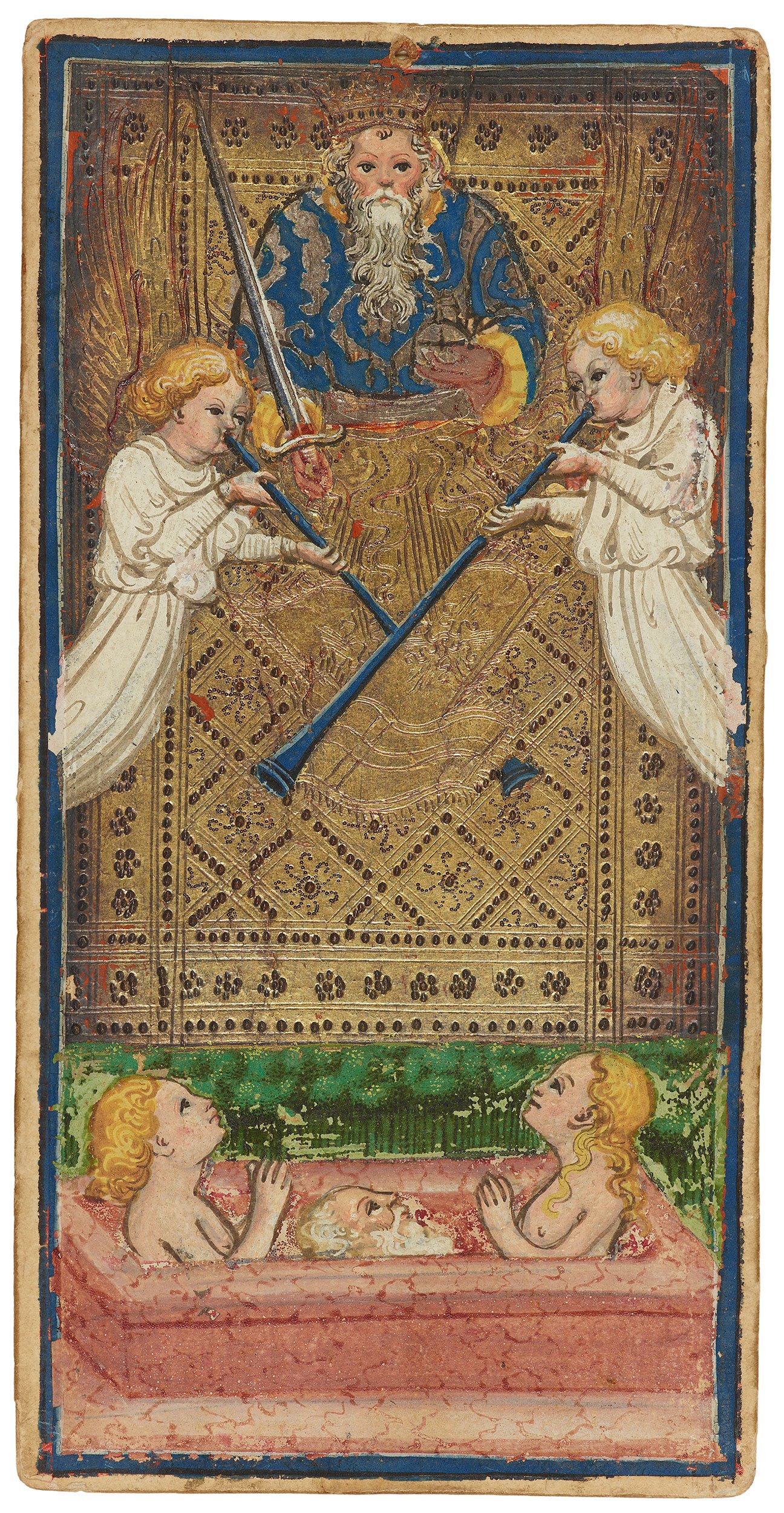
The Judgment card says: “What translates through you is not personal. There are personal and impersonal aspects of operating in this world.”
Intuition is personal and impersonal. The personal part is the specificity of an ask: “what would work best for me in this situation?” The impersonal part is sometimes the ingenuity of an answer that can feel out of left field but make sense somehow. The impersonal part is also what the Diamond Sutra teaches: “应无所住而生其心.” (“[Ones] should use their minds spontaneously and naturally, without being constrained by preconceived notions arising from the senses.”).
Trust connects the two.
